Adinkra Symbols and Their Meanings: A Guide to 20 Akan Symbols
What Adinkra symbols mean, from Gye Nyame and Sankofa to the ram's horns, plus where they come from and how Adinkra cloth is stamped in Ghana.
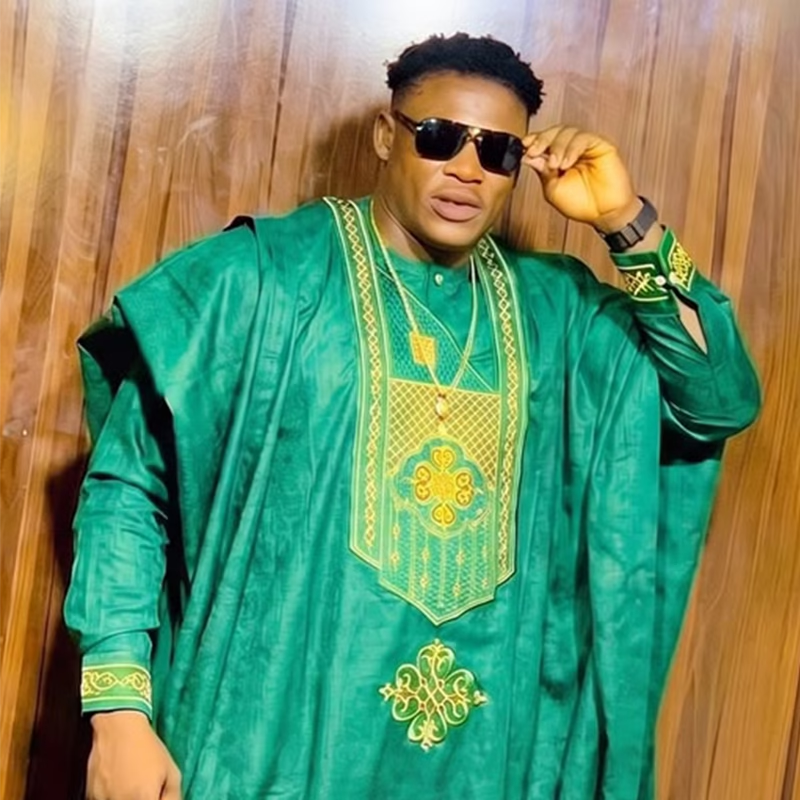
An Agbada is a large, flowing robe from Nigeria, worn over a long shirt and matching trousers. It comes from Yoruba tradition, and it is the outfit a man puts on when the day matters: a wedding, a naming ceremony, a chieftaincy title, a big birthday.
It is also the most dramatic garment in West African menswear. Laid flat, the outer robe is often wider than the wearer's full arm span. When it is cut well, it makes a room turn around.
Joshua Williams, the bodybuilder and designer behind Josh Stitches, grew up around the Agbada. He also grew up unable to find one that fit his shoulders. This guide covers what the Agbada is, how its pieces work together, when to wear one, and what changes when the man inside it lifts.
The Agbada is the ceremonial robe of the Yoruba people of southwestern Nigeria, also worn in the Republic of Benin and Togo. The word is often translated as "big gown," and the name fits. The robe falls to the ankles or just above, open at the sides, with enough fabric to drape in deep folds.
It has close cousins across West Africa. The Hausa and Fulani of northern Nigeria wear the babban riga, a similar wide robe with its own cut and embroidery. Today the Agbada is worn by men across Nigeria regardless of ethnic background, and across the diaspora.
Traditionally there are two kinds. A lighter, simpler Agbada is for everyday and casual wear. A heavier, embroidered Agbada is reserved for ceremonies, and that is the one most people picture.
A full Agbada is a set of four pieces, worn in layers.
| Piece | What it is |
|---|---|
| Agbada Outer robe | The wide gown worn on top. Its armholes are cut so the fabric drapes over the arms. |
| Buba or danshiki Inner top | The layer underneath. A buba is a loose, round-neck shirt with sleeves; a danshiki is the sleeveless version. |
| Sokoto Trousers | Matching trousers. Some styles taper to a narrow ankle; others are cut wide through the leg. |
| Fila Cap | The hat that finishes the look, from a soft cap worn folded to one side to the abeti aja, with flaps that point up like ears. |
The three garments are usually made from the same fabric, so the set reads as one outfit. The cap can match or contrast. Beads, a wristwatch and good shoes do the rest.
The Agbada is formalwear. Think of it the way you would think of a tuxedo or a three-piece suit, with more fabric and more presence.
For a dinner or an office event, a Senator set is usually the better call: cleaner, lighter and easier to move in.
The fabric decides how formal an Agbada reads. The classic is aso oke, a hand-woven Yoruba cloth made in narrow strips and sewn together. It is heavy, textured and built for ceremony.
Modern Agbadas also come in brocade, lace, damask, velvet, linen and cotton blends. Velvet has a long history here: Yoruba kings have worn velvet Agbadas embroidered with beads. Lighter fabrics drape more softly and are easier to wear in warm weather. Heavier fabrics hold their shape and look grander in photos.
The embroidery sits around the neckline and down the chest, and on ceremonial pieces it can cover much of the front. Thread color is part of the statement. Joshua's emerald Agbada carries gold embroidery on the chest panel and cuffs; his royal blue velvet one uses a single multicolor medallion. Tone-on-tone thread reads quieter. The patterns and colors carry meaning, which we cover in African patterns and their meanings.
At Josh Stitches, you choose the cloth, the color and the pattern. Joshua sources fabric from the markets in Aba, Nigeria, and sends you photos of the options before anything is cut.
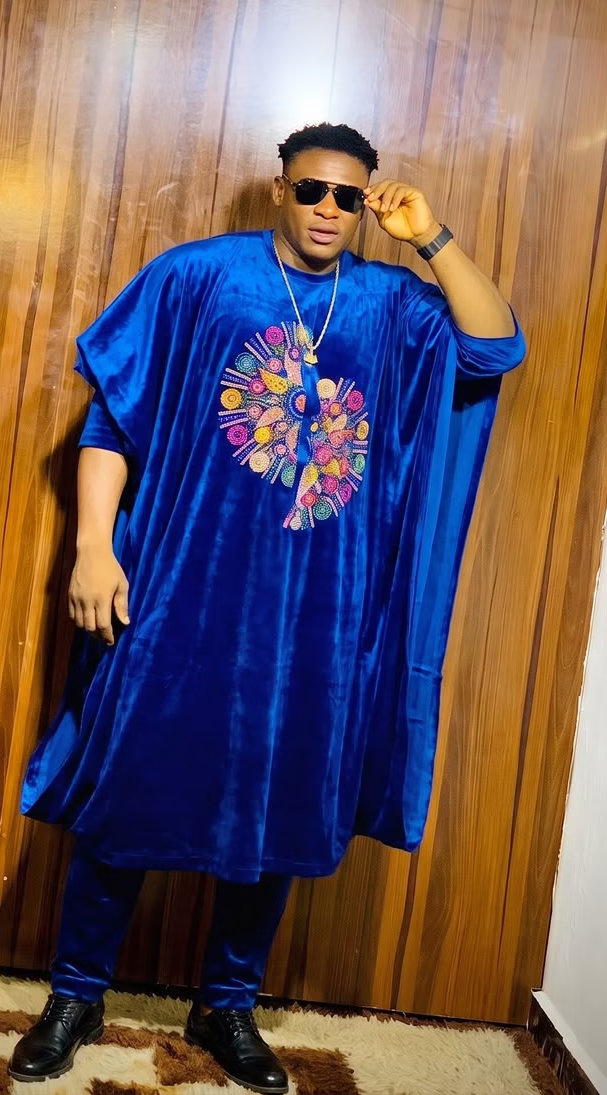
The robe is not as hot as it looks. The open sides and the space between layers let air move, which is part of why it has lasted for generations in a tropical climate.
You would think a robe this big fits anyone. It does not. The outer robe is forgiving, but the pieces under it are not, and the robe itself still has to sit right on the shoulders.
This is where most off-the-rack Agbadas fail a man who trains:
Joshua Williams knows this from the inside. He is a competitive bodybuilder who took the stage at the 2026 IFBB West African Championship, and he spent years in traditional attire that was cut for somebody else's body. That is why he started designing.
Every Josh Stitches Agbada starts with your measurements. The buba is cut for your chest, shoulders and tapered waist. The armholes give your arms room to move. The sokoto clear your thighs and still finish clean at the ankle. The robe is balanced for your shoulder width so it sits where it should.
If you are still working out what fits your frame in everyday clothes, start with How to Dress an Athletic Body
Is the Agbada Yoruba or Igbo? The Agbada comes from Yoruba tradition. It is now worn across Nigeria, by Igbo, Hausa and other men alike, and throughout the diaspora.
What is the difference between an Agbada and a Senator? A Senator is a fitted, knee-length tunic with matching trousers and no outer robe. The Agbada adds the large flowing robe on top, which makes it more formal.
What is the difference between an Agbada and a dashiki? A dashiki is a loose, often brightly printed pullover shirt. In a traditional Agbada set, a sleeveless danshiki can be the inner layer, but the dashiki on its own is casual wear.
Can a non-Nigerian wear an Agbada? Yes, especially when invited to a Nigerian wedding or celebration. Wearing it well and with respect for the occasion is the point. We go deeper in Can white men wear African prints?
How long does a made-to-measure Agbada take? An Agbada is one of the more elaborate pieces Joshua makes, so plan on at least 7 business days to make it. That clock starts once your measurements are in, the design is final and you have approved the fabric. Joshua then ships from Aba, Nigeria, by DHL, and delivery to the US usually takes 10 to 14 business days. For a wedding or event, start the conversation at least five weeks ahead.
An Agbada is meant to be worn with your chest out and your shoulders square. That is hard to do in one that was cut for someone else.
Josh Stitches makes the Agbada, along with Senator sets and Kaftans, to your exact measurements, priced in US dollars with tracked delivery to the United States. Tell Joshua about your occasion and he will help you choose the fabric, the embroidery and the cut. Meet Joshua, or start at the Josh Stitches homepage.
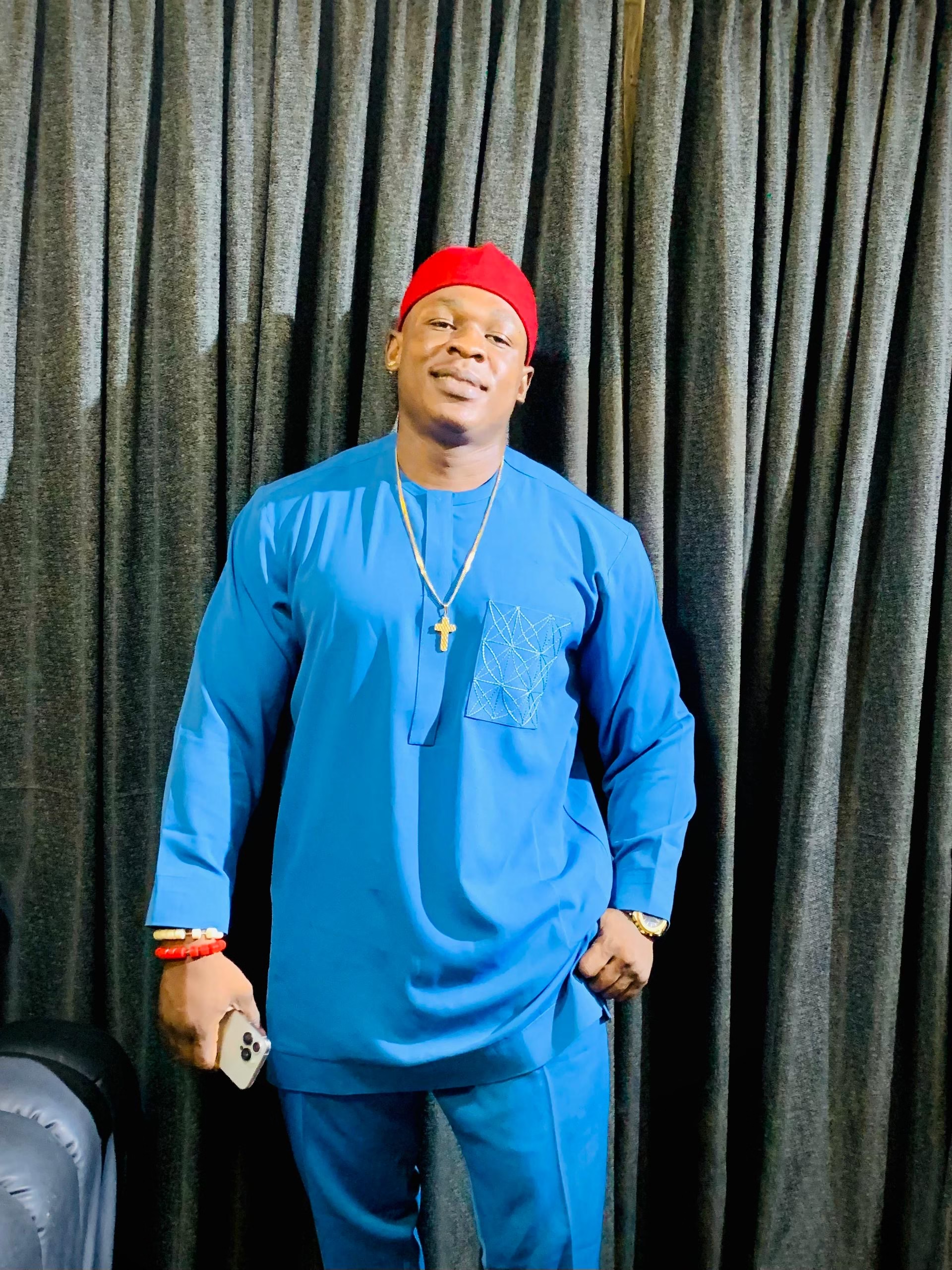
Written by Joshua Williams
Joshua Williams is a Nigerian bodybuilder who competed at the 2026 IFBB West African Championship, and the designer behind Josh Stitches. He makes Agbada, Senator sets, Kaftans and Ankara fits to measure for men who train.
Read Joshua's storyJoshua makes Agbada, Senator sets, Kaftans and Ankara fits to your measurements. Message him on WhatsApp to start an order.
What Adinkra symbols mean, from Gye Nyame and Sankofa to the ram's horns, plus where they come from and how Adinkra cloth is stamped in Ghana.
What Kente cloth means, from its twelve traditional colors to pattern names born from proverbs and politics, plus how to wear Kente well.
Is it appropriate for white men to wear African prints? This thoughtful guide explores culture, respect, and how to wear African menswear well.