How to dress a muscular body: the style guide for men who lift
Broad shoulders, big arms and strong legs break most off-the-rack clothing. Here is how to find clothes that fit a body you built, how to check the fit in a mirror, and which African styles suit an athletic frame best.
To dress a muscular body well, get the shoulders right first, then choose clothes that are fitted through the chest and tapered at the waist, with real room in the arms and thighs. Pick fabrics with some stretch or structure, skip oversized cuts that hide your shape, and go made-to-measure for anything you want to fit perfectly.
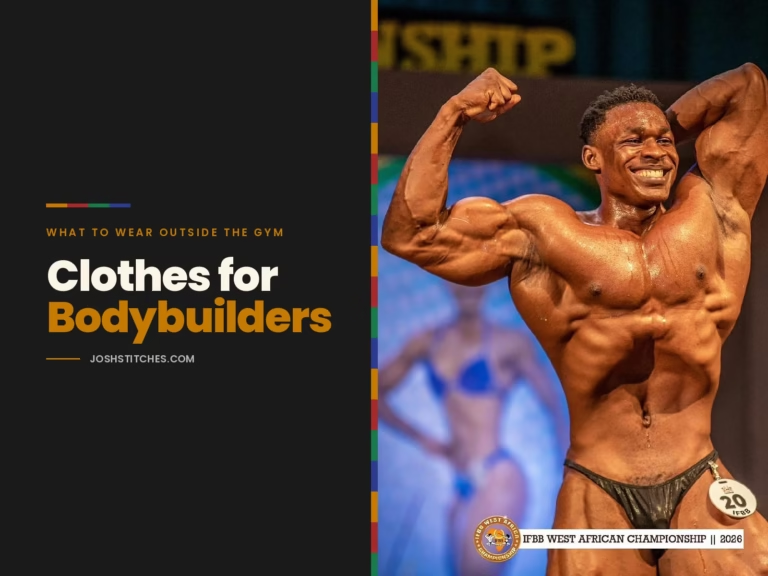
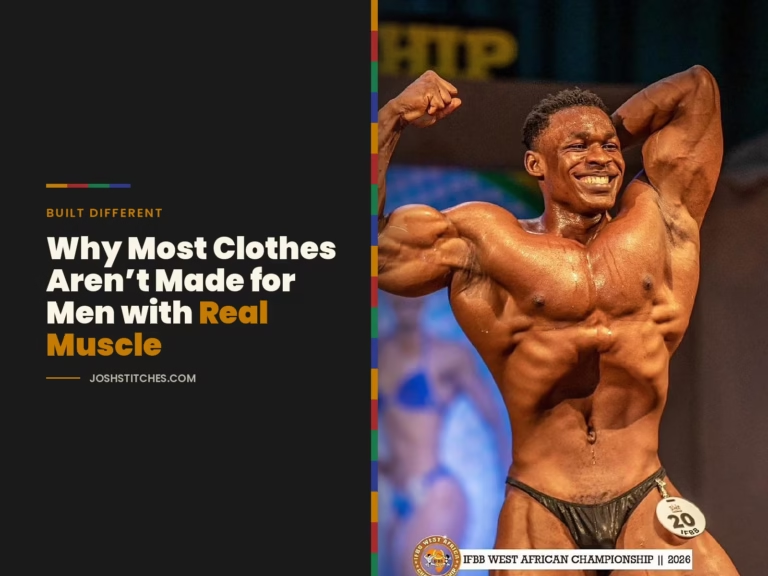
If you train, you already know the problem. Shirts strain across the shoulders, sleeves squeeze your arms, trousers fight your thighs, and anything that fits your chest hangs off your waist. That isn't a flaw in your body. Most clothing is cut for an average frame that doesn't build muscle, and we explain exactly why in Why Most Clothes Aren't Made for Men with Real Muscle.
This guide is the practical side. Joshua Williams is a competitive bodybuilder and the designer behind Josh Stitches, so he deals with every one of these fit problems himself. Here is how to solve them, area by area.
1. Start with the shoulders
The shoulders decide how everything else on a shirt, jacket or tunic hangs. A tailor can take in a waist or shorten a sleeve, but shoulders are very hard to alter, so get them right before anything else.
The shoulder seam should sit right at the edge of your shoulder bone. If it rides up onto the top of your shoulder, the garment is too small and will pull every time you move. If it drops down onto your upper arm, it's too big, and it will make broad shoulders look sloped instead of strong.
2. Follow your V-taper
Training typically builds a V-shape: broad shoulders and chest narrowing to a smaller waist. Standard sizing assumes the chest and waist grow together, which is why a shirt that closes over your chest tents out around your middle.
Look for pieces that are:
- Fitted through the chest, with enough room to breathe and move
- Tapered at the waist, so the fabric follows your shape instead of falling straight down
- Cut with room at the back and lats, so reaching forward doesn't pull the front tight
3. Sleeves for real arms
Arms often grow faster than sleeves allow for. A sleeve that's tight around the biceps cuts off your shape, wrinkles when you bend your elbow and looks a size too small even when the body fits.
- Short sleeves look best ending around the middle of the biceps, close to the arm without squeezing it.
- Long sleeves should end at the wrist bone with your arms relaxed, and still let you bend your elbow without the cuff riding halfway up your forearm.
- The armhole matters as much as the sleeve. A higher, well-cut armhole gives more movement than simply making the whole sleeve wider.
4. Make room for your legs
Squats and deadlifts build thighs and glutes that most trousers aren't cut for. The usual result is trousers that are tight in the thigh and seat but loose at the waist, which is the opposite of what you need.
Look for:
- Room in the seat and thighs, with the fabric skimming rather than gripping
- A taper from the knee down, so the leg looks clean rather than straight and boxy
- A rise that sits securely at your natural waist, so trousers stay put when you move
- Some stretch in the fabric if you want to sit, squat or climb stairs comfortably
5. Fabrics that move with muscle
A muscular body needs fabric with either a little give or enough body to hold a clean shape. The best options include:
- Stretch cotton, for fitted shirts and trousers that move with you
- Ankara cotton, breathable and bold, ideal for shirts and casual sets
- Brocade blends and lightweight jacquard, which have the structure for Senator sets and formal pieces
- Quality knits with slight elasticity, for polos and casual tops
Very thin, clingy fabric shows every line and can look strained; very stiff fabric with no give fights you every time you move.
6. Fitted, not tight
The most common mistake men who lift make is hiding in oversized clothes. It feels comfortable, but loose, boxy cuts erase the shape you've worked for and can make a strong frame look heavy.
The opposite mistake is clothing so tight it looks like it's about to burst. Neither reads as stylish. What you want sits in between: close enough to show your shape, loose enough to move freely. Well-fitted clothes work with your body, and that makes even a simple outfit look intentional.
7. African styles on an athletic build
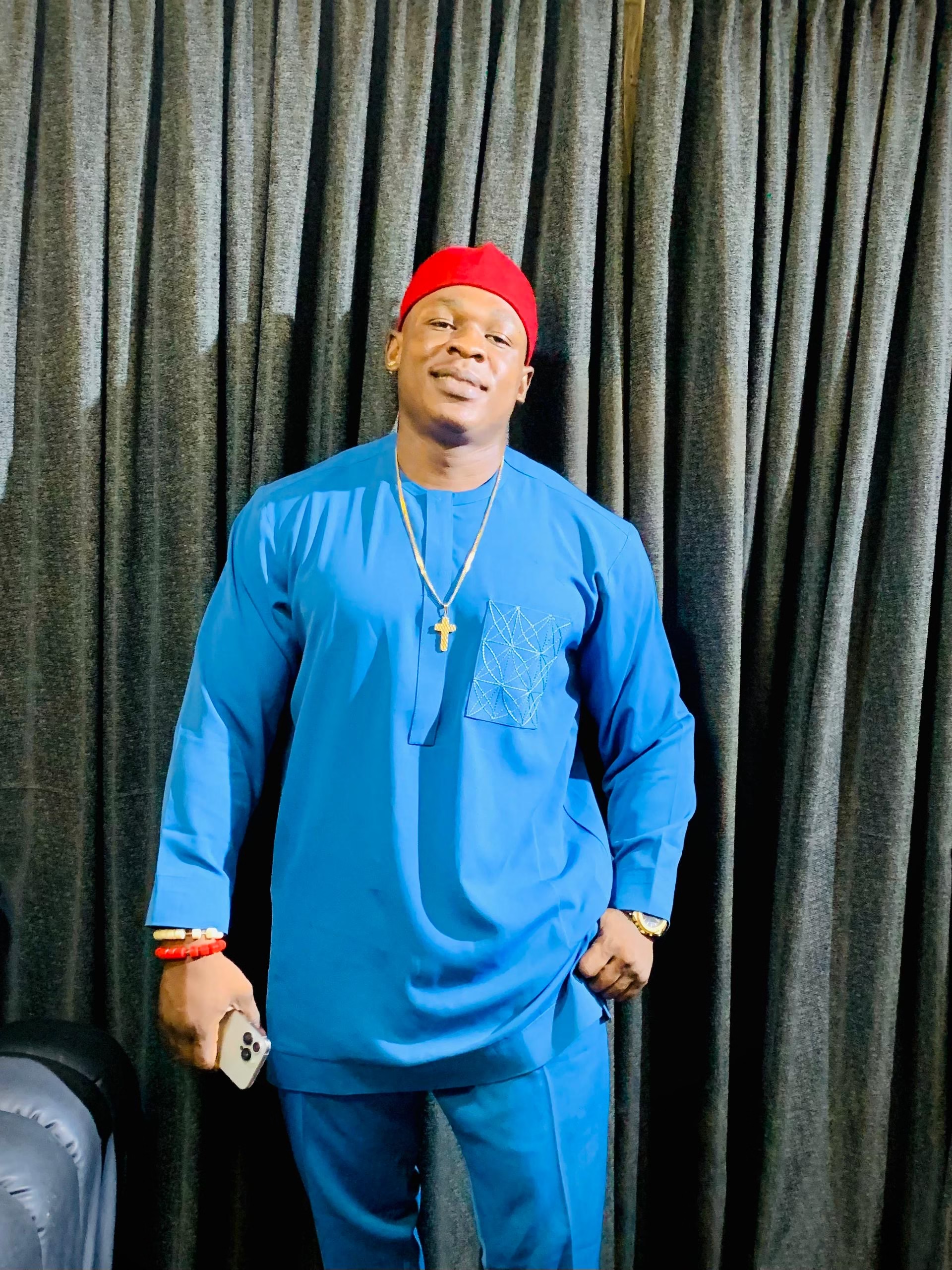
African menswear is made for confident men, and the structured silhouettes and bold colors flatter a strong physique. The fit rules above still apply, with a few points specific to each style:
- Senator setsAsk for a tunic shaped to follow the V-taper rather than cut straight. Side slits give your thighs and hips room to move, and a tunic ending around mid-thigh balances broad shoulders.
- AgbadaThe flowing outer robe hangs from the shoulders, so the shoulder fit of the inner tunic decides how cleanly it drapes. Fitted inner pieces keep the volume from swallowing your frame.
- KaftansA kaftan should skim your body, not tent around it. Look for a cut that's straight but not wide, with sleeves roomy enough for your arms.
- Ankara shirts and setsBroad shoulders carry large, bold prints well. Short sleeves sized for your arms and a tapered body keep a busy print looking sharp rather than sloppy.
For the meaning behind the cloth itself, see Ankara Prints for Men and Kente Cloth Meaning.
8. The fit checklist
Use this when you try something on, or when you're describing a fit problem to a tailor:
| Area | Good fit | Needs work |
|---|---|---|
| Shoulders | Seam sits at the edge of the shoulder bone | Seam rides up onto the shoulder or drops onto the arm |
| Chest | Buttons lie flat; you can breathe and reach | X-shaped creases pulling between buttons |
| Waist | Fabric follows your taper | Loose fabric balloons or bunches at the middle |
| Arms | Sleeve close to the biceps without squeezing | Sleeve grips the arm or wrinkles when you bend |
| Seat and thighs | Fabric skims; a half squat feels easy | Strain lines across the thighs or a gaping waistband |
| Length | Tunic and shirt hems balance your shoulders | Too short exaggerates the torso; too long shortens your legs |
9. When made-to-measure is worth it
For a muscular build, the gap between "it fits" and "it fits perfectly" usually comes down to whether the garment was cut for you. Off-the-rack "athletic fit" adds a little room in the chest, but it rarely fixes the shoulders, arms and seat together.
Made-to-measure starts from your body rather than a size chart. For men who lift, the measurements that make the biggest difference are:
- Chest and shoulder width
- Biceps circumference
- Natural waist
- Seat and thigh
- Shirt or tunic length and trouser inseam
It's worth it most for the pieces you wear to important occasions and the ones you wear most often. If you're weighing your options, read Made-to-Measure vs Bespoke, which also explains how ordering a custom piece works.
Cut for the body you built. Joshua makes Senator sets, Agbada, Kaftans and Ankara pieces to each client's measurements. See his designs or message him on WhatsApp using the button below.
Questions men who lift ask
Do muscular men look better in fitted or loose clothes?
Fitted, but not tight. Clothes that follow your shape through the shoulders, chest and waist look sharper and more intentional than oversized cuts, which hide your build and can make a strong frame look heavy.
Is "athletic fit" clothing enough for men who lift?
Sometimes, for lighter builds. Most athletic-fit clothing simply adds room in the chest, while still running tight in the shoulders, arms and seat. The more muscle you carry, the more likely you'll need made-to-measure pieces.
Why don't trousers fit muscular legs?
Standard trousers assume your thighs and seat are in proportion to your waist. Training builds the legs and glutes much more than the waist, so trousers that fit your waist are too tight in the thighs, and trousers that fit your thighs are too loose at the waist.
Should I size up if a shirt is tight in the arms?
Usually not. Sizing up fixes the sleeves but makes the shoulders and waist too big, so the whole shirt looks sloppy. A better fix is a shirt cut with more room in the sleeves and a tapered body, or one made to your measurements.