African patterns and their meanings: a guide to seven great textiles
From Kente and Adinkra in Ghana to aso-oke and adire in Nigeria, mud cloth in Mali and Kuba cloth in the Congo: how Africa's best-known patterns are made, what they mean, and how to wear them well.
African patterns carry meaning through their names, symbols and colors. Ghana's Kente is woven with named patterns and symbolic colors, Adinkra symbols each stand for a proverb, Nigeria's aso-oke and adire mark status and celebration, Mali's mud cloth uses motifs tied to history and protection, and Congolese Kuba cloth uses geometric designs linked to identity. Many patterns began as a way to communicate without words.
How African patterns carry meaning
Across the continent, cloth has long done more than cover the body. Patterns can name a proverb, honor a leader, mark a funeral, show who belongs to a family or signal a person's rank. The meaning lives in three places: the name given to a design, the symbols within it and the colors chosen.
How a pattern is made matters too. The seven textiles in this guide reach their designs in five different ways: weaving, stamping, printing, resist-dyeing and painting.
| Textile | Where | How the pattern is made |
|---|---|---|
| Kente | Ghana (Asante, Ewe) | Woven into narrow strips sewn together |
| Adinkra | Ghana (Akan) | Stamped by hand with carved calabash stamps |
| Ankara | West Africa | Printed with a resin resist, then dyed |
| Aso-oke | Nigeria (Yoruba) | Woven into narrow strips sewn together |
| Adire | Nigeria (Yoruba) | Resist-dyed in indigo: tied, stitched or painted with starch |
| Mud cloth | Mali (Bamana) | Painted by hand with fermented, iron-rich mud |
| Kuba cloth | DR Congo (Kuba) | Woven from raffia palm fiber, then embroidered |
Kente (Ghana)
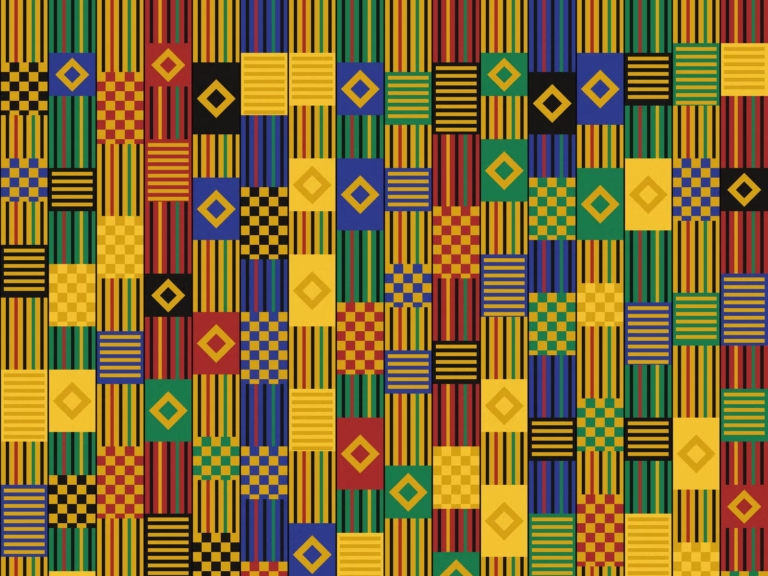
Kente is Ghana's most famous cloth: hand-woven silk and cotton strips sewn into a full cloth, historically worn by Asante royalty and today the cloth of weddings, festivals and graduations. Every Kente pattern has a name, often drawn from a proverb or historic event. Sika Futuro means gold dust; Obaakofo Mmu Man means one person does not rule a nation. Its colors carry meaning too, from gold for royalty to green for growth.
Read the full story in Kente Cloth Meaning: Colors, Patterns and History.
Adinkra symbols (Ghana)
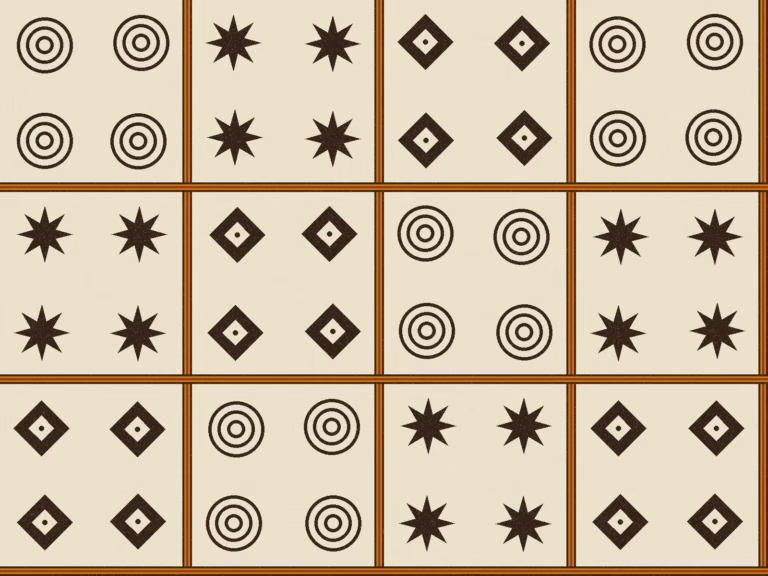
Adinkra are symbols of the Akan people of Ghana, each standing for a proverb, a value or an idea. Traditionally they are stamped onto cotton cloth by hand, using stamps carved from calabash gourds and a dark dye made from the bark of the badie tree. Ntonso, near Kumasi, is still known for this work.
Adinkra cloth was historically associated with funerals and mourning, though the symbols are now worn and used everywhere, from fashion to architecture. Akan tradition links the name to a 19th-century king of Gyaman, Kofi Adinkra, though historians note the Asante were making stamped cloth before that story is said to have happened. Three of the best-known symbols:
- Gye Nyame"Except God." The supremacy of God, and the most popular Adinkra symbol in Ghana.
- Sankofa"Go back and get it." Shown as a bird looking backward or a curled heart shape: it's no shame to return to the past for what you've forgotten.
- Dwennimmen"Ram's horns." Strength combined with humility: the ram fights hard but submits when it must.
See twenty symbols and their meanings in our full guide to Adinkra symbols.
Ankara (West Africa)
Ankara, also called African wax print or Dutch wax, is a brightly printed cotton made with a resin-resist process inspired by Indonesian batik. Dutch manufacturers developed it in the 19th century, and by the late 1800s West Africans had made it their own. Each print leaves the factory with a number; market traders and customers give it a name, such as "Speed Bird," known in Ghana as "Rich today, poor tomorrow."
Ankara is the everyday print of West African fashion. For its history and how to wear it, read Ankara for Men: What Ankara Fabric Is and How to Style It.
Aso-oke (Nigeria)
Aso-oke is the prestige cloth of the Yoruba people of southwestern Nigeria. Like Kente, it is hand-woven in narrow strips that are sewn together, and it is worn for weddings, naming ceremonies and festivals. Men wear it as flowing agbada and as fila caps; women wear it as wrappers and gele head ties. Families often keep fine aso-oke for generations.
Three classic types are the foundation of the tradition:
- SanyanBeige or tan, originally woven from wild silk. The most prestigious of the three.
- AlaariMagenta or deep red, originally woven from imported silk.
- EtuDeep indigo cotton, often with fine light stripes.
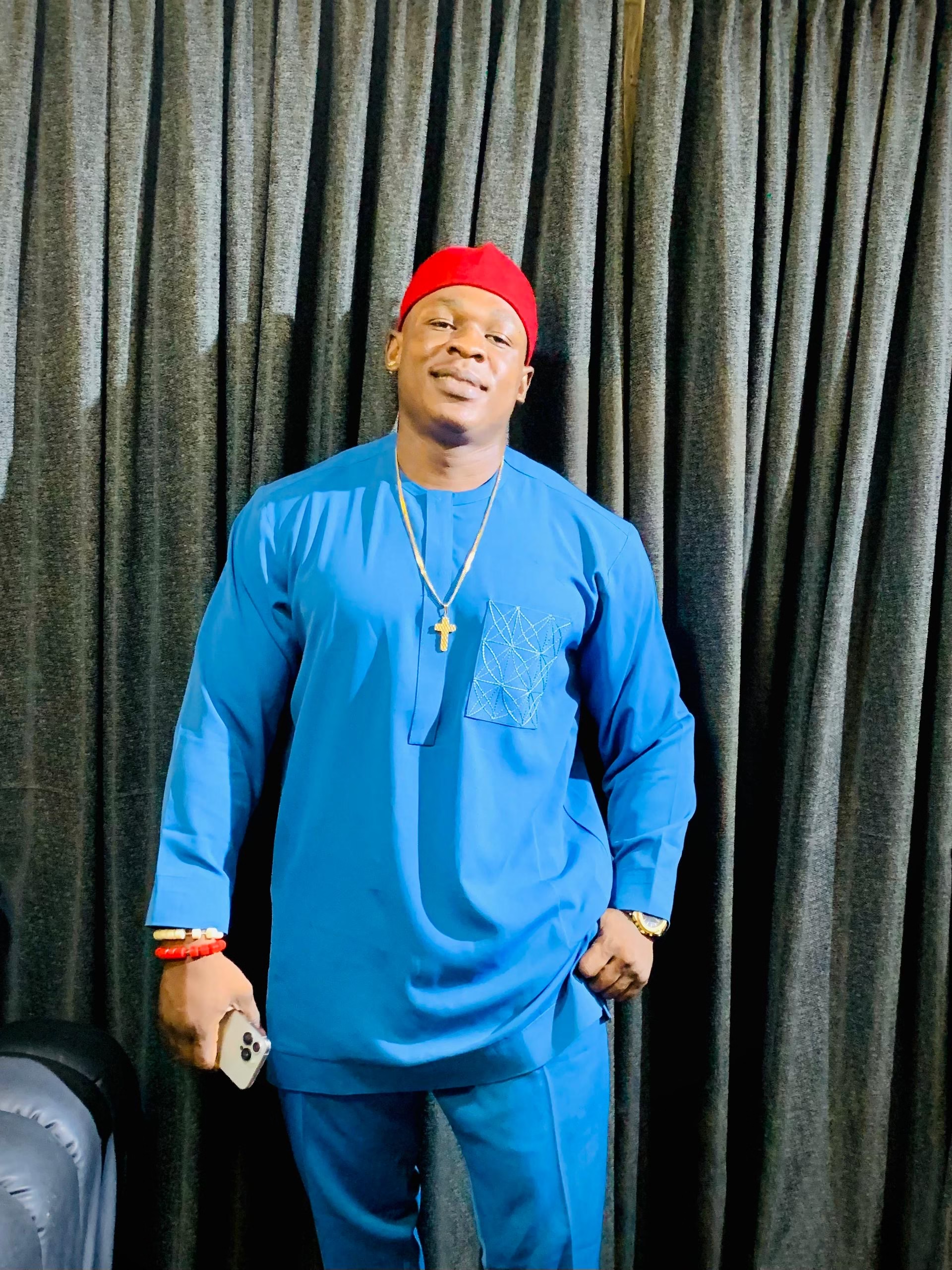
Joshua is Nigerian, and aso-oke is the woven cloth of his own heritage.
Adire (Nigeria)
Adire is indigo-dyed cloth made by Yoruba women, using resist techniques that keep the dye away from parts of the fabric to form a pattern. The name refers to tying and dyeing, and there are three main methods:
- Adire oniko, where the cloth is tied or bound before dyeing
- Adire alabere, where it is stitched with raffia or thread
- Adire eleko, where a starch paste is painted or stenciled on as a resist
Abeokuta became a famous center of adire making. Where aso-oke was kept as an heirloom, adire was traditionally an everyday cloth. Its deep blues make it one of the easiest African textiles to wear with modern clothing.
Mud cloth (Mali)
Mud cloth, or bògòlanfini, comes from the Bamana people of Mali. Men weave the cotton on narrow strip looms; women then paint the designs by hand using iron-rich mud that has been left to ferment, sometimes for a year or more. The result is the distinctive palette of black, brown and cream.
Traditionally, mud cloth motifs referred to history, proverbs and protection, and the cloth was worn at important life moments. Today its bold geometric patterns are found in fashion and interior design around the world.
Kuba cloth (DR Congo)
Kuba cloth comes from the Kuba people of what is now the Democratic Republic of the Congo, where raffia textiles have been made for centuries. The base cloth is woven from raffia palm fiber, and women decorate it with embroidery and cut-pile stitching, a technique that gives some pieces a soft, velvet-like texture.
Kuba designs are geometric and highly varied, and fine raffia textiles were tied to status and to ceremonies, including burial. Their patterns have influenced artists and designers far beyond Central Africa.
What colors mean
Color meanings differ between cultures, so there is no single African color code. The best documented are the Akan meanings associated with Kente:
- Gold: royalty, wealth and high status
- Green: growth, harvest and renewal
- Blue: peace, harmony and love
- Red: sacrifice, struggle and intense political or spiritual feeling
- Black: maturity, spiritual energy and the ancestors
- White: purification and celebration
Elsewhere, color often speaks through the materials themselves: the indigo of adire and etu aso-oke, or the earth tones of mud cloth. For all twelve Kente colors, see the Kente color guide.
Wearing African patterns as a man
- Know what you're wearing. Learn the name and origin of a pattern before you wear it, especially symbols like Adinkra that carry religious or funeral meaning.
- Match the cloth to the occasion. Woven cloths like Kente and aso-oke belong to celebrations; Ankara and adire work for everyday wear.
- Let one pattern lead. Pair a patterned piece with solid colors taken from the cloth, so the pattern is the focus.
- Buy from the source when you can. Hand-woven and hand-dyed cloth supports the weavers and dyers who keep these traditions alive.
- Get the fit right. Bold patterns look best on garments cut to your body. See how to dress a muscular body for the fit essentials.
For a deeper look at respect and appropriation, read Can White Men Wear African Prints?
Wear the meaning, cut for you. Joshua makes Senator sets, Agbada, Kaftans and Ankara pieces to measure, in the fabric and colors you choose. See how custom ordering works.
Questions about African patterns
What do African patterns mean?
African patterns carry meaning through their names, symbols and colors. Many are named after proverbs, historic events or leaders, Adinkra symbols each represent a proverb or value, and colors such as gold, green and red carry their own associations.
What are the main types of African fabric?
Well-known African textiles include Kente and aso-oke (hand-woven strip cloth), Adinkra (stamped cloth), Ankara (printed wax cloth), adire (indigo resist-dyed cloth), mud cloth (painted with fermented mud) and Kuba cloth (woven raffia).
What is the most popular Adinkra symbol?
Gye Nyame, meaning "except God," is the most popular Adinkra symbol in Ghana. It represents the supremacy of God.
What is the difference between Kente and aso-oke?
Both are hand-woven in narrow strips that are sewn together. Kente comes from Ghana and is known for its multi-colored, named patterns, while aso-oke comes from the Yoruba of Nigeria, with three classic types: sanyan, alaari and etu.
Is it respectful to wear African patterns if I'm not African?
Many people welcome it when it's done with knowledge and respect: learning what a pattern means, wearing it for suitable occasions and buying from African makers where possible. Treating sacred or funeral symbols as decoration without context is where criticism usually arises.
Sources include museum and university collection guides on West and Central African textiles, published research on Asante Kente and Adinkra, and the Saint Louis Art Museum's notes on aso-oke.